
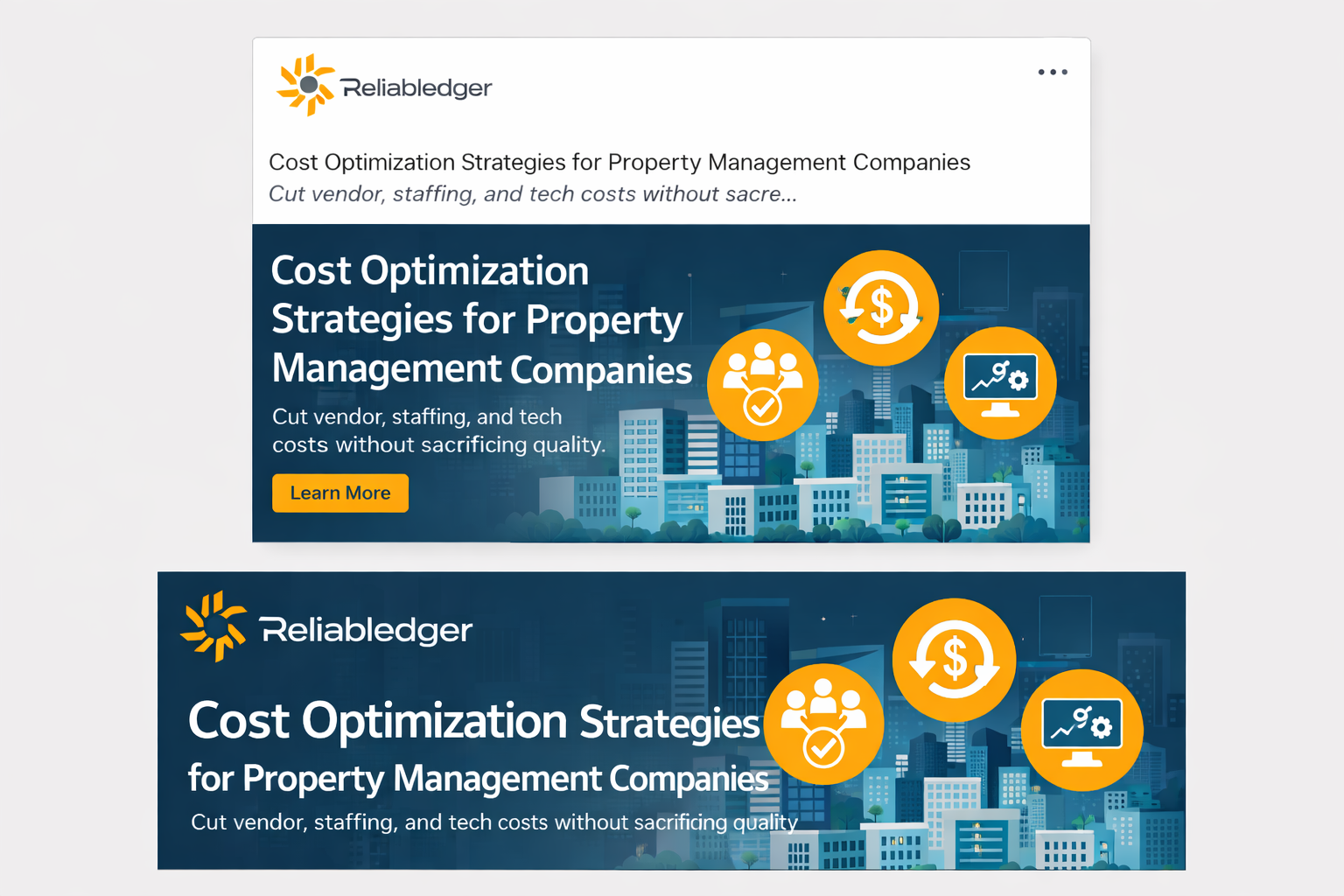
How to Reduce Expenses Without Compromising Service Quality
In today’s competitive real estate landscape, property management companies are under constant pressure to maintain profitability while delivering exceptional tenant and owner experiences. Cost optimization is no longer just a financial exercise—it’s a strategic necessity.
Done right, it doesn’t mean cutting corners. It means building smarter, leaner, and more scalable operations.
1. Rethinking Vendor Costs: From Expense to Strategic Partnerships
Vendor expenses—maintenance, landscaping, security, utilities—often form the largest chunk of operational costs.
Where companies go wrong:
Many property managers stick with long-term vendors without revisiting pricing or performance benchmarks.
Optimization strategies:
- Regular vendor audits: Evaluate cost vs. service quality annually
- Bulk negotiation: Consolidate properties under fewer vendors for better pricing
- Performance-based contracts: Tie payments to SLAs and KPIs
- Local vendor sourcing: Reduce travel and emergency response costs
Pro tip: Build a preferred vendor network instead of ad-hoc hiring—it improves both cost control and service consistency.
2. Staffing Optimization: Lean Teams, Smarter Roles
Labor is another major cost center. But reducing headcount isn’t the solution—optimizing productivity is.
Common inefficiencies:
- Overlapping roles
- Manual bookkeeping and reporting
- High-cost in-house teams for repetitive tasks
Optimization strategies:
- Outsource accounting functions: AP/AR, reconciliations, and financial reporting can be handled more efficiently by specialized firms
- Role restructuring: Shift teams from transactional work to oversight and strategy
- Cross-training staff: Improve flexibility and reduce dependency on single individuals
- Performance metrics: Track output per employee, not just hours worked
Impact: Companies that outsource back-office accounting often reduce costs by 30–50% while improving reporting accuracy.
3. Tech Stack Optimization: Stop Overpaying for Underused Tools
Property management firms often accumulate multiple software tools—many of which overlap or go underutilized.
Typical issues:
- Paying for redundant features across platforms
- Underutilization of existing systems
- Lack of integration leading to manual work
Optimization strategies:
- Audit your tech stack: Identify tools with overlapping functionalities
- Consolidate platforms: Use integrated property management systems
- Leverage automation: Automate rent collection, reporting, and communication
- Negotiate SaaS contracts: Annual billing and bundled pricing can significantly reduce costs
Key insight: The goal is not more technology—it’s better-aligned technology.
4. Financial Visibility: The Foundation of Cost Control
You can’t optimize what you can’t measure.
Many property management companies lack real-time visibility into:
- Property-level profitability
- Expense trends
- Budget vs. actual comparisons
Optimization strategies:
- Monthly financial reporting: Standardized and timely
- Property-wise P&L tracking: Identify underperforming assets
- Variance analysis: Catch cost overruns early
- Cash flow forecasting: Avoid unnecessary financing costs
Result: Better decisions, faster.
5. Standardizing Processes Across Properties
Inconsistent processes lead to inefficiencies, errors, and hidden costs.
Optimization strategies:
- Create SOPs for accounting, maintenance, and tenant communication
- Standardize approval workflows for expenses
- Implement checklists and automation for recurring tasks
Outcome: Reduced errors, faster execution, and lower operational costs.
Final Thoughts
Cost optimization in property management isn’t about spending less—it’s about spending right.
The companies that win are those that:
- Treat vendors as strategic partners
- Build lean, high-impact teams
- Use technology intentionally
- Rely on strong financial insights
At its core, optimization is about creating a system that scales efficiently as your portfolio grows.
How Reliabledger Helps
At Reliabledger, we specialize in helping property management companies streamline their accounting operations, improve financial visibility, and reduce unnecessary costs—without compromising on quality.
From day-to-day bookkeeping to strategic financial reporting, we build systems that support growth.
0 Comments